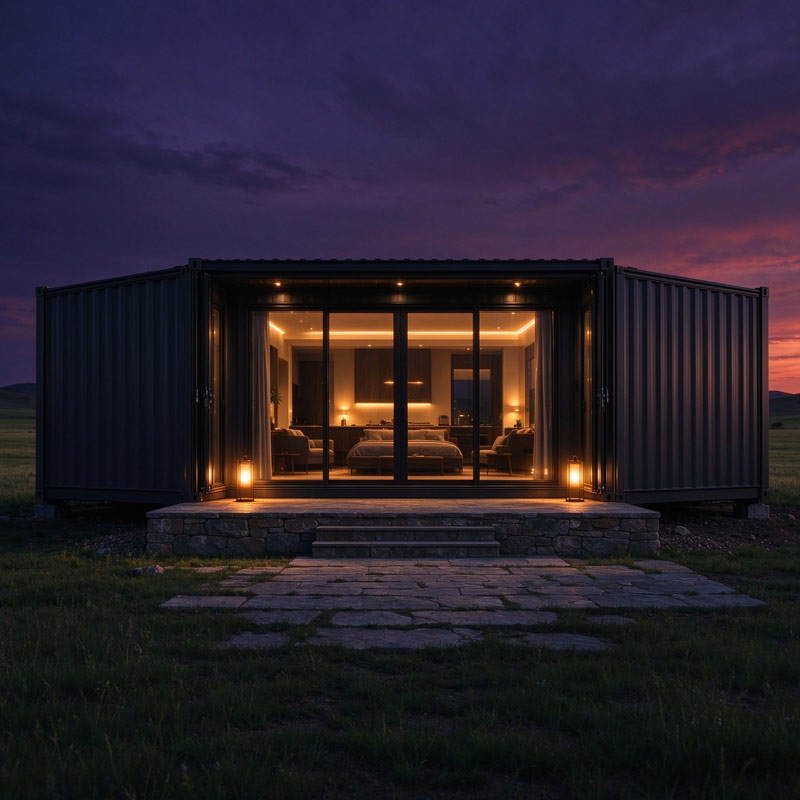
A resort developer planning a glamping site eventually faces one question: buy a finished capsule pod, or convert a shipping container? Both deliver prefabricated accommodation and both ship from China. The two products serve different budget bands, different guest expectations and different construction timelines, so the right answer depends on what the site actually sells.
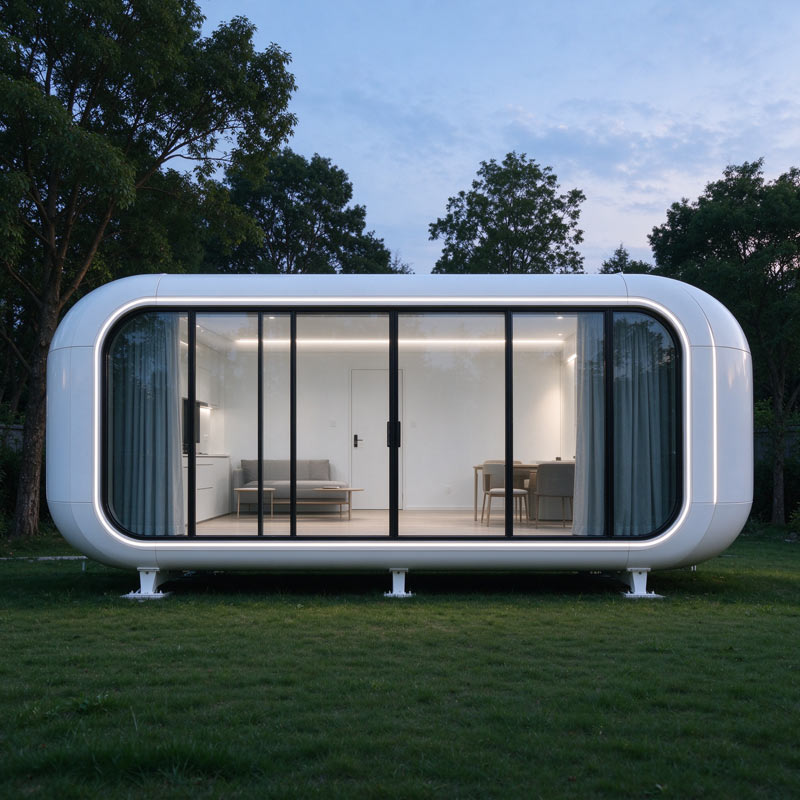
What a space capsule house really is
A space capsule house arrives as a sealed pod. An aluminium shell, curved panoramic glazing, insulation, a finished bathroom, lighting and a smart control panel all leave the factory assembled. A crane lifts the pod onto a levelled base, one connection links power and water, and a unit accepts guests within hours.
The design targets scenic sites where the view carries the price: cliff edges, lakesides, vineyards and forest camps. Because a space capsule house ships whole, one 40HQ container carries one to two units.
What a container house conversion involves
A container house starts from a steel-framed modular box. Buyers choose wall panels, doors, windows, partitions, electrics and bathroom modules, and the factory builds to a drawing. Flat-pack designs collapse for shipping, so a 40HQ container carries six to twelve units depending on the folding system.
Site work runs from a few hours for a folding unit to a few days for a fully fitted expandable unit. A container house suits volume work: staff quarters, site camps, relief housing and budget rooms where bed count beats design.
Side-by-side comparisonQuestionSpace capsule houseContainer houseTypical unit costHighest bandLower bandInstall on siteAbout 2 hours after lifting2 hours (folding) to 2 days (expandable)Units per 40HQ1-21-12 by designGuest appealDesign-led, photo-drivenPractical, familiarNightly rate potentialPremiumMid-marketLifespan15-20+ years15-20 yearsRelocationCrane, whole unitForklift or truck, flat-packBest roleGuest roomsStaff, camp, budget roomsFigures are typical industry ranges and vary with specification — confirm against a real quotation before modelling a project.
Where the space capsule house wins
On a site selling scenery, a space capsule house earns more per night. Curved glass turns a hillside plot into a room with a panorama, and guests book the photograph before reading the specification. Owners commonly price a capsule unit above a container conversion on the same land, because the design carries the premium.
A space capsule house also opens faster: no panel assembly, no joinery, no weather window. For a resort racing a season opening, the capsule route removes weeks from the schedule.
Where the container house wins
Volume work belongs to the container house. A camp needing forty staff beds cannot justify forty capsule pods, and a container house delivers the same beds for a fraction of the budget. Flat-pack folding designs also cut freight sharply: a hundred folded units need eight to thirteen containers, while a hundred capsule pods need fifty to a hundred. A container house absorbs rough handling on remote sites, accepts simple repairs by a local crew, and stacks flat for storage between projects.
The hybrid layout most projects end up with
Successful glamping projects usually mix the two. Capsule pods take the premium pitches with the best views, where nightly rate justifies the unit cost. Container houses handle reception, kitchen, staff housing, storage and laundry behind the scenes, plus overflow beds in low season. A hybrid layout lifts average revenue per pitch while keeping the service block affordable, and one supplier covering both ranges simplifies freight, spare parts and after-sales support.
Running a payback check
Assume a premium pitch at a modest nightly rate and sixty percent occupancy across a season, purely for illustration. A space capsule house typically needs more booked nights to repay than a container conversion, because the unit costs more.
The capsule wins on revenue per available night; the container wins on cost per bed. Sites with strong scenery and high occupancy favour the capsule, while sites with moderate rates or long closed seasons favour the container house. Verify local nightly rates before committing capital.
Frequently asked questions
Is a space capsule house cheaper than a container house?
No. A space capsule house sits in the highest price band of prefabricated accommodation, while a container house costs less per square metre. The gap narrows once nightly rate and guest appeal enter the calculation.
Can a space capsule house be moved after installation?
Yes. Lifting points sit inside the roof structure, so a crane relocates the pod to a new pitch in a few hours. A container house moves flat-packed and needs reassembly.
Which option opens a site faster?
A space capsule house reaches guest-ready status within hours of lifting. A container house needs panel assembly, joinery and service connections, stretching from one day to a week.
Does a capsule pod work in cold or hot climates?
With the insulated specification, a space capsule house holds a comfortable interior from minus 20 to 40 degrees Celsius, supported by air conditioning, optional underfloor heating and a heat-recovery ventilator.
Can one supplier cover both product types?
Yes. YCXY manufactures capsule pods and container houses in the same facility, so a mixed project ships on one schedule with matched specifications and one point of contact.
Sourcing both ranges from one factory
YCXY builds space capsule house units and expandable, detachable, folding and X-folding container houses in-house, supplying resorts, contractors and distributors worldwide. Send the site layout, guest capacity and target nightly rate to receive a mixed proposal with drawings, a loading plan and a quotation within 24 hours.